Making and Materials
Fresh Wreath Making and Materials
How fresh evergreen wreaths are built and what goes into them: noble fir and mixed boughs, wire frames, swags, garland and the care that keeps them green.
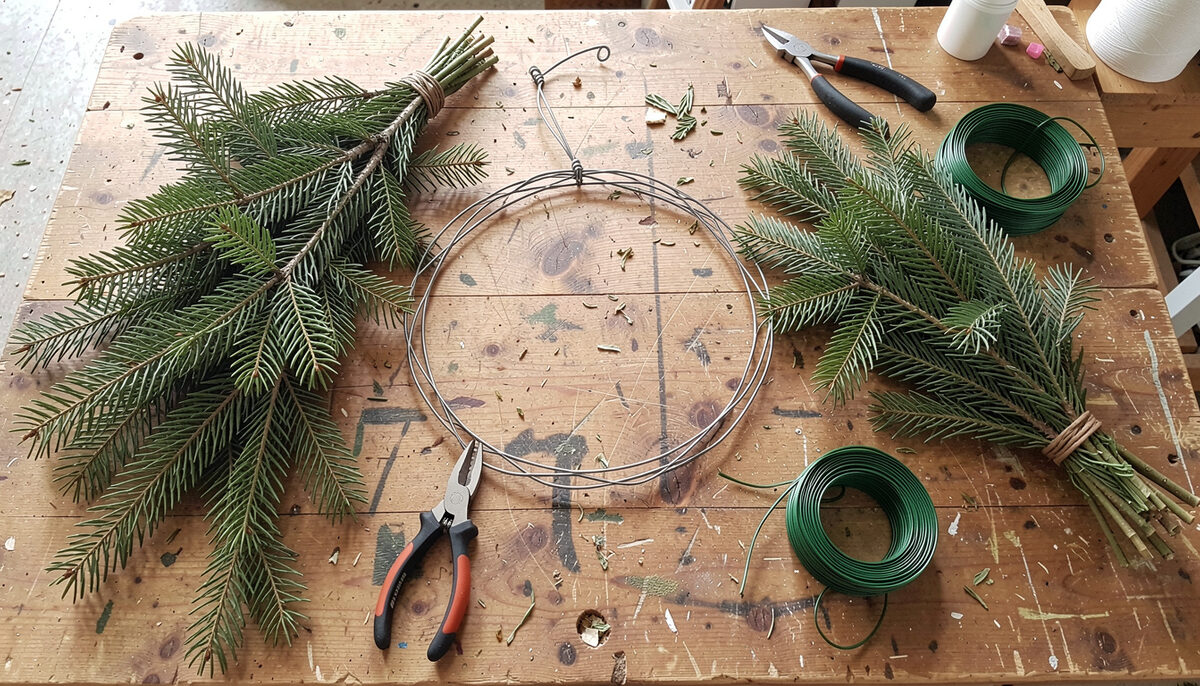
A fresh evergreen wreath is a simple object made from four parts: boughs, a frame, wire and a finish. What separates a wreath that holds its colour through December from one that browns by the second week is rarely the decoration. It is the condition of the boughs when they were cut, how much of each branch was used, and how tightly the bundles were bound to the ring. This section explains those decisions before you buy, hang or sell a wreath.
What counts as a fresh wreath
A fresh wreath is built from evergreen branches that were still alive on a tree days or weeks earlier. It is not a preserved wreath, which has been treated so it will not dry, and it is not an artificial wreath, which is made from plastic and fabric. A fresh wreath is a perishable product with a season and a shelf life, and it behaves like cut flowers rather than like a decoration you store in the attic.
That single fact explains most of what follows. A fresh wreath is heaviest and most fragrant on the day it is made. It slowly gives up moisture from the moment the bough is cut. Cold slows that loss and heat speeds it up. A wreath made in the Pacific Northwest and shipped across the country can still arrive in good condition, but only if it was cut recently, packed with care and moved quickly.
The three things that decide quality
Buyers often judge a wreath by its bow. Makers judge it by three things that are harder to see. The first is needle retention, which is how well the needles stay attached to the branch as it dries. The second is bough density, which is how much greenery sits behind the front face. The third is the frame, which is what stops a heavy wreath from sagging or losing its shape.
Needle retention varies by species and by how the tree was grown. Noble fir is prized for holding its needles and for a stiff branch that keeps its form. Cedar and juniper bring fragrance and texture but behave differently as they dry. Density is a choice made at the bench: a maker can pack a wreath full or stretch the same boughs across a larger ring. The frame is usually a wire ring or a double ring, and its gauge matters once the wreath is loaded with wet greenery.
How the parts fit together
The guides in this section follow the wreath from the tree to the door. How a fresh evergreen wreath is made walks through bough selection, the frame, the wiring and the finishing bow, and explains what each step changes about shape and freshness. Noble fir and mixed evergreen wreaths compares the two bough mixes that dominate the market and what each means for weight, scent and price.
Not every decoration is round. Evergreen swags and garland covers the two shapes that share the same boughs and wire but hang differently: the swag, which is a short vertical piece for a door or post, and garland, which is a long rope for a rail, mantel or arch. Both are made at the same bench with the same material, and both raise the same question of how to measure before you order.
Boughs of the Pacific Northwest
Most fresh wreaths sold in North America begin in the forests of Oregon, Washington and British Columbia. The region grows the true firs that the trade prefers, and noble fir in particular accounts for a large share of commercial production. The Oregon State University Christmas tree program, based at the North Willamette Research and Extension Center, documents the species, the seed orchards and the growing conditions behind that supply, and it is a useful reference for anyone who wants to know where the boughs come from.
Climate sets the harvest. Boughs are cut once the trees are dormant and the needles have hardened for winter, which usually means late autumn. That timing is why fresh wreaths are a seasonal product rather than a year round one, and why the same wreath bought in November and in January can be weeks apart in condition. A buyer who understands the calendar understands why a wreath in early December is usually the freshest of the season.
What this section does not claim
This magazine describes how fresh wreaths are made and sold. It does not sell wreaths, and it does not speak for any workshop, grower or wholesaler. Where a figure is not published by the source named on the page, the guide says so rather than guessing. Where a claim depends on how a particular maker works, the guide says that too.
Read the three guides in order if you are new to fresh greenery, or open the one that matches your question. If you are choosing rather than making, the section on choosing, giving and caring for a wreath covers freshness checks, gifts and hanging. If you are buying for a group or a shop, the section on wreath fundraisers and wholesale covers the trade side.
Preserved wreaths are a different product
A preserved wreath has been treated so that the greenery keeps its colour and does not need water or misting. The treatment replaces the moisture in the branch with a preserving fluid, which fixes the colour and softens the branch. The result lasts far longer than a fresh wreath and needs no care at all, and it is sold alongside fresh greenery in many shops.
The trade off is that a preserved wreath is not fresh. It has no resin scent, and the branch is no longer alive, so it will not dry out but it will not change either. It also costs more than a fresh wreath of the same size, because the preserving process adds a step. A buyer who wants greenery that can be stored and reused without looking tired should know that preserved and artificial are different products, and that preserved keeps the look of real foliage. The buying section explains where each belongs: see fresh and artificial wreaths compared.
Making and Materials
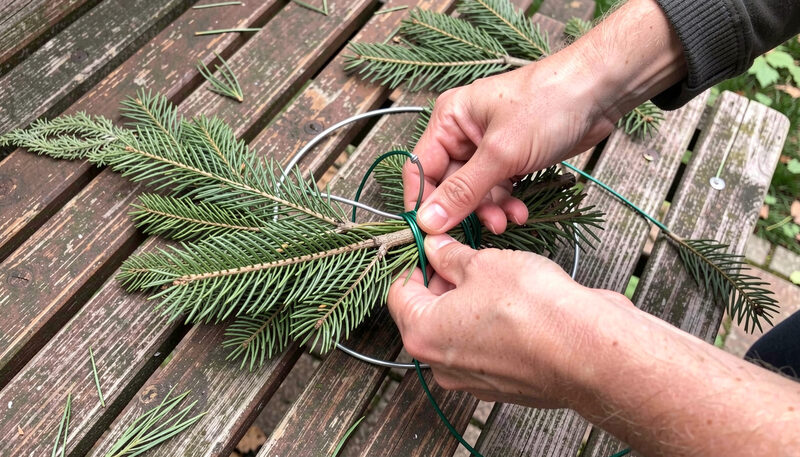
How a Fresh Evergreen Wreath Is Made
Follow how a fresh evergreen wreath is built, from bough selection and the wire frame to the bow, and what each step means for shape and freshness.
Sort, bind, shape, finish: the bench in five moves.
Making and Materials
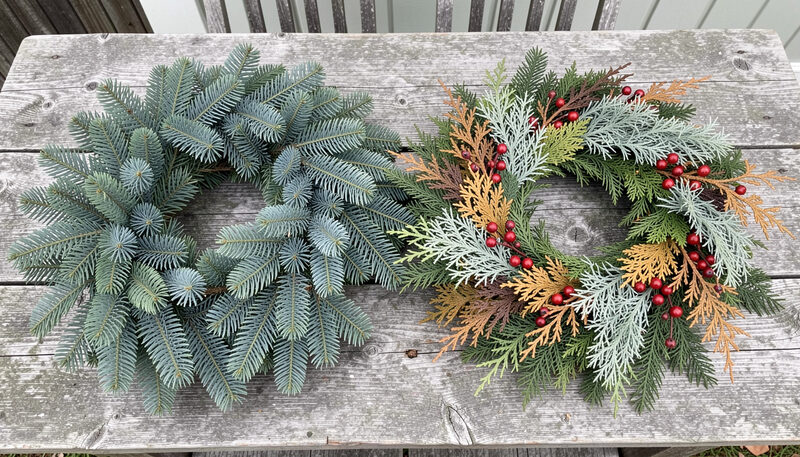
Noble Fir and Mixed Evergreen Wreaths
Compare noble fir and mixed evergreen wreaths on needle, scent, colour, weight and price, and pick the bough mix that suits a door, a gift or a sale.
One species or a blend: what changes on the door.
Making and Materials
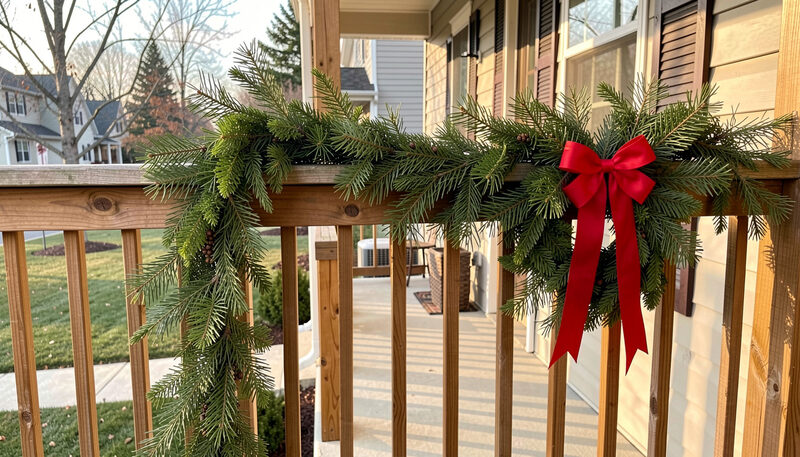
Evergreen Swags and Garland
See how evergreen swags and garland are made and measured, where each suits a door, rail or mantel, and how to keep fresh greens looking full.
Two shapes that share the boughs but hang differently.