Choosing and Giving
How to Choose a Fresh Wreath
Judge a fresh wreath by needle colour, scent, bough density and frame, match diameter to the door, and know what a fair price includes.
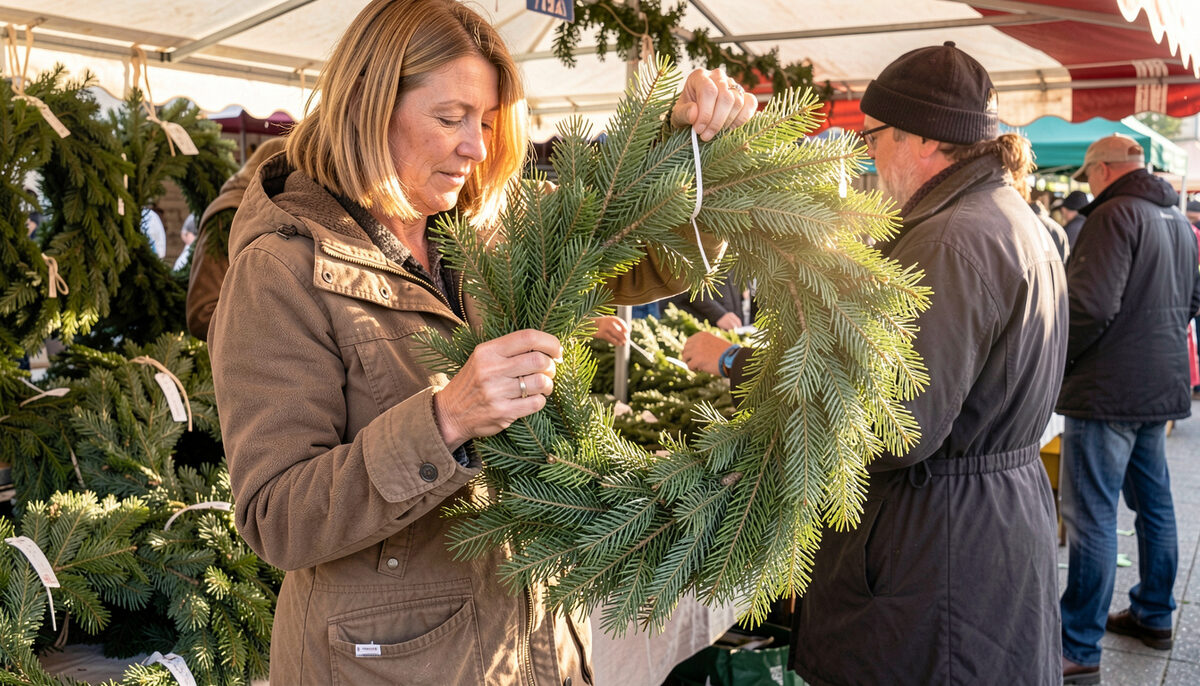
A fresh wreath is bought in a hurry, often from a stall in the cold or from a page of small photographs. The good news is that freshness can be judged in about a minute with your hands and your nose, and the rest of the decision is about size, boughs and finish. This guide sets out the checks in the order that saves the most disappointment.
Start with the shake
Pick up the wreath and shake it gently over a clear surface. A fresh wreath may drop a few needles, especially if it has been handled, but a wreath that rains needles is old or has been stored badly. The shake test is the fastest single check there is, and it works on every species. If the vendor will not let you lift the wreath, that is itself information.
Next, bend a branch. A fresh branch is pliable and springs back. A branch that snaps, or that feels dry and papery, tells you the wreath is already past its best. Do this on the back of the wreath where a small flex will not disturb the face. Then smell it. A fresh wreath carries the resin smell of cut evergreen. A wreath that smells of dust or of nothing has been around for a while.
Look at colour and coverage
Colour should be even across the face. Patches that are brown, yellow or grey, especially near the outer edge, are the first places a wreath dries. Look at the wreath from an angle as well as from the front: a wreath that looks full straight on but thin from the side has been dressed to photograph rather than to hang.
Coverage is the second half of this check. Turn the wreath over and look at the back. You should see the wire and the stems, but you should not see daylight through the middle of the ring. A back that is almost bare means the maker stretched too few boughs across the frame, and the wreath will look thin once it is on a door.
Match the diameter to the door
Size is where buyers most often guess wrong. A wreath that looks generous in a shop can look small on a wide front door, and a large wreath can overwhelm a narrow one. As a working rule, a standard single front door takes a wreath of about two feet, and a wide or double door takes something larger. Above a mantel or on a barn door, a bigger piece is usually right.
Measure the door before you buy, and remember that the wreath will sit at eye level when hung, not at the top of the door. The same logic applies to a swag or a length of garland, which are bought by length rather than diameter: see evergreen swags and garland for how to measure a run.
Know the boughs
A noble fir wreath and a mixed evergreen wreath look and behave differently, and the price difference usually reflects real material rather than marketing. Noble fir is denser, heavier and slower to shed. A mixed wreath is softer, more varied and generally cheaper for the same size. The full comparison is in noble fir and mixed evergreen wreaths.
Ask what is in the wreath if it is not labelled. A seller who knows the product will name the species. A seller who does not may still have a good wreath, but you will have to judge it entirely on the shake and the colour.
Judge the frame and the finish
A stiff frame holds the round shape. Squeeze the ring through the greenery and feel whether it gives. A thin ring on a heavy wreath will sag, and a sagging wreath never recovers. On the finish, look at how the bow is attached: a bow wired on properly will survive wind, while a bow stapled to one point will flop or tear away.
Decoration adds weight and cost, so decide what you actually want. A plain wreath with a good bow is often better value than a heavily decorated one built on a weak frame. If the wreath is a gift, the finish matters more, because the recipient sees the front first. The buying side of gifts is covered in corporate holiday wreath gifts and in the wider section on choosing, giving and caring for a wreath.
What a fair price includes
Price reflects four things: how many boughs are used, which species, how heavy the frame is, and how much hand work went into the finish. Two wreaths of the same diameter can differ by a wide margin for those reasons alone, and the cheaper one is not automatically the worse buy. The New York Christmas Tree Farmers Association notes that a well made wreath should last the season and hold its colour and needles, which is the standard worth paying for.
What a price cannot fix is bad storage. A wreath kept in a warm room before sale is already losing its window, whatever it cost. Buy from somewhere cold if you can, take it home the same day, and hang it as soon as possible. The care routine that follows purchase is in how to hang and care for a fresh wreath.
Buying in cold weather
A wreath bought on a cold day and carried home in a warm car has already begun to dry before it reaches the door. If the journey is long, keep the wreath out of the heated cabin, or wrap it loosely and hang it as soon as you get home. A wreath left in a hot car for an afternoon can lose a week of its life.
The same applies to a wreath bought online. A piece that spends a weekend in a warm depot will be older than its shipping date suggests. Choosing a seller who ships quickly and in cold weather is a real quality decision, not a detail.